.png)
OMRX Design
Medical Records and Prescription Management System
— Problem
Manual records, fragmented care
The current manual prescription and medical records processes in healthcare are inefficient, involving complex paperwork, phone calls, and faxes between providers and pharmacies. This leads to difficulties in accessing vital medical records, which can result in diagnosis and treatment errors.
Administrative tasks like appointment scheduling and billing also become cumbersome, affecting overall facility efficiency. Patient privacy is compromised due to inconsistent handling of sensitive data. Additionally, the absence of patient history and data analysis capabilities hampers medical research and quality enhancement efforts.
ROLE
RESPONSIBILITIES
GOAL
Sole UI/UX Designer
End-to-End UI and UX Process
Automating and enhancing the medication prescribing and health records management process.
— User Research
What we heard, in numbers
91%
of physicians describe manual records processes as time consuming and frustrating.
73%
of patients preferred electronic prescriptions for the convenience and speed of the process.
86%
of doctors believed electronic health records positively impacted their ability to make clinical decisions.
Twenty-five healthcare providers, one recurring story
— User Interviews
I conducted interviews with 25 healthcare providers to understand the problem and their needs. Here are some of their answers and the data I collected.
One major challenge is managing patient medication histories, it's hard to keep track of what they're taking, and there's a risk of duplications or interactions.
Communication between healthcare providers is often fragmented, leading to disjointed care plans. We need to facilitate better coordination and patient outcomes.
It's difficult to track prescription history and potential drug interactions. Having an electronic system would aggregate this information in one place, reducing the risk of adverse reactions.
Administrative tasks consume a significant portion of my day. Without digital support, tasks like updating patient charts and reconciling prescriptions take longer than they should.
Who OMRX is designed for
— User Persona
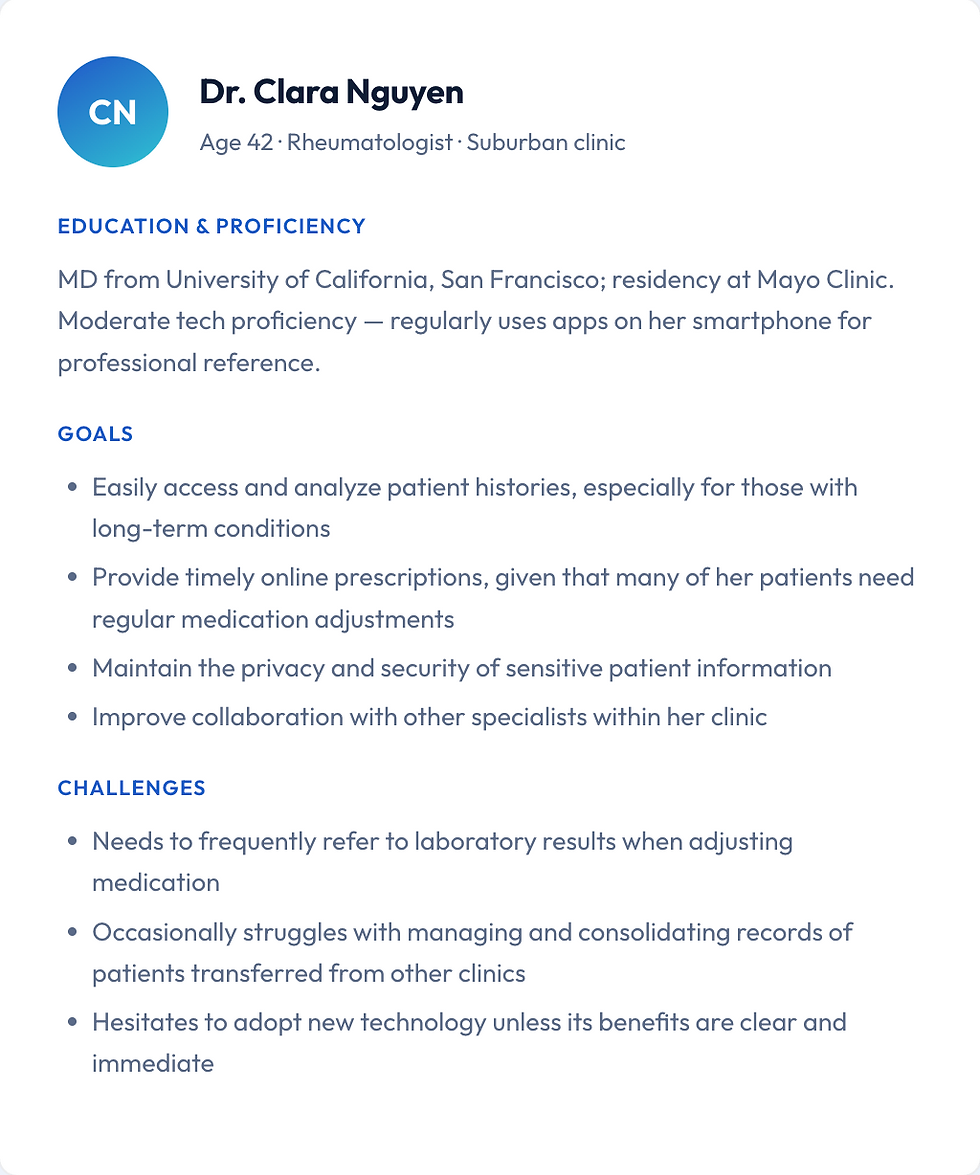
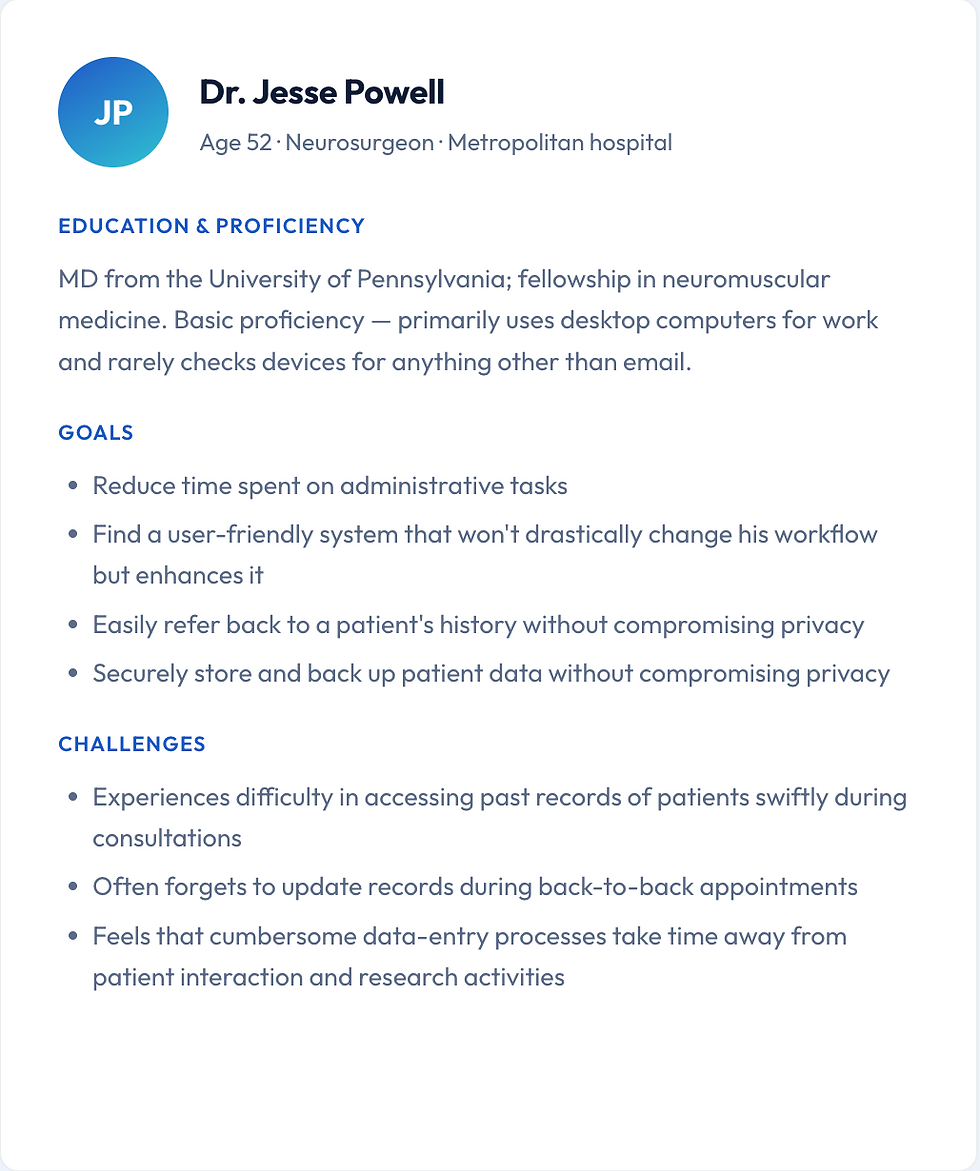
The following personas were created to represent the ideal users of the application, based on the information gathered during user interviews and research.
Seeing the process through the user's eyes
— Empathy Map
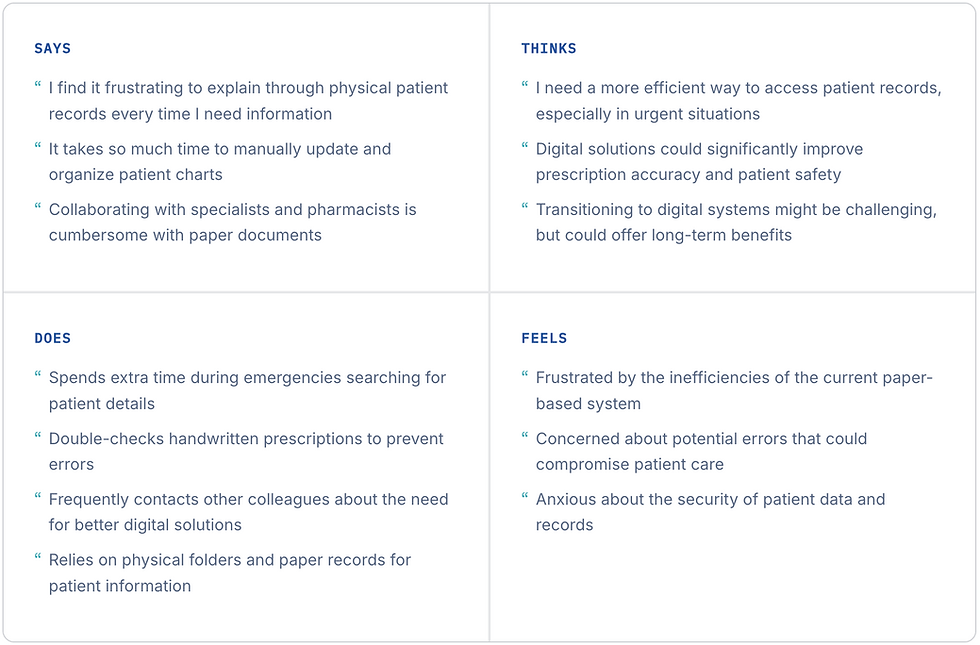
Built from interviews with healthcare providers, across four aspects of the user's experience: what they say, think, do, and feel, helping the team understand user needs, experiences, and motivations for a more user-centered design.
— User Flow
Getting from login to task, quickly
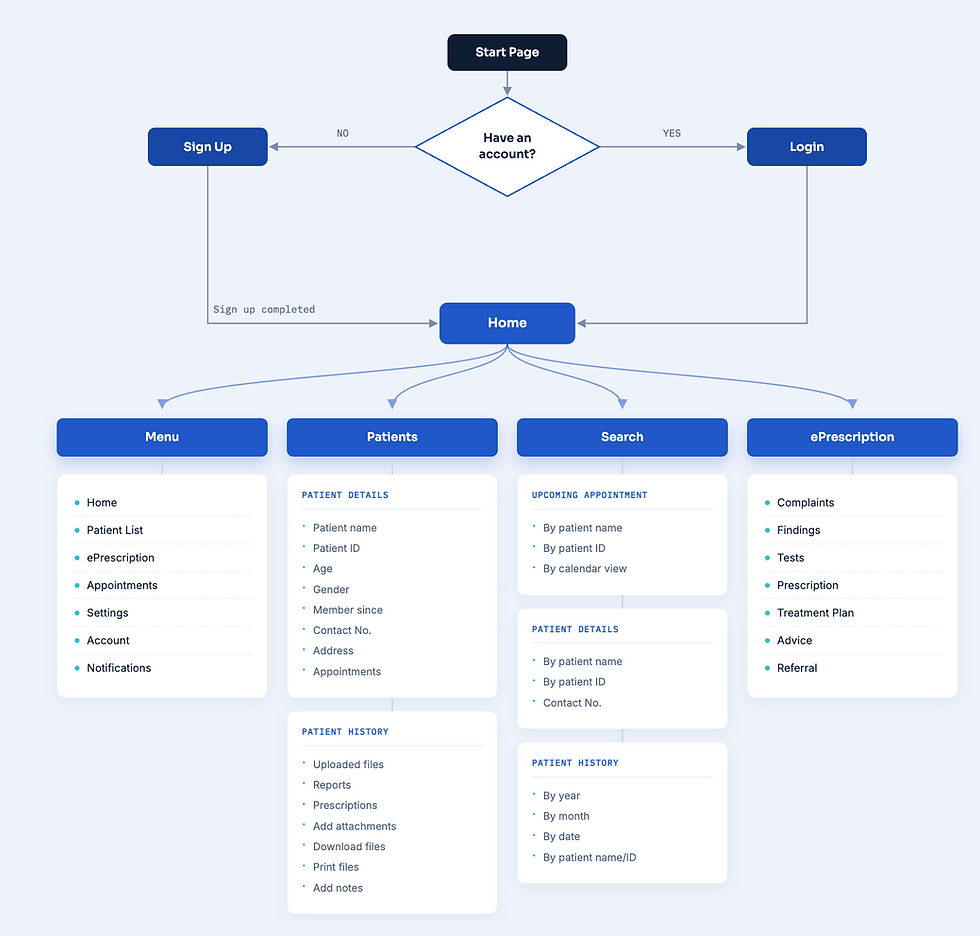
Built on content requirements, user needs, and research data. Navigation starts with login/signup and leads to key features such as patient records and prescriptions, forming a structured pathway aimed at simplifying interactions and improving efficiency for healthcare professionals.
— Prototypes
From Requirements to Reality
Built from design specifications, user requirements, and project objectives.
Patient Care Management
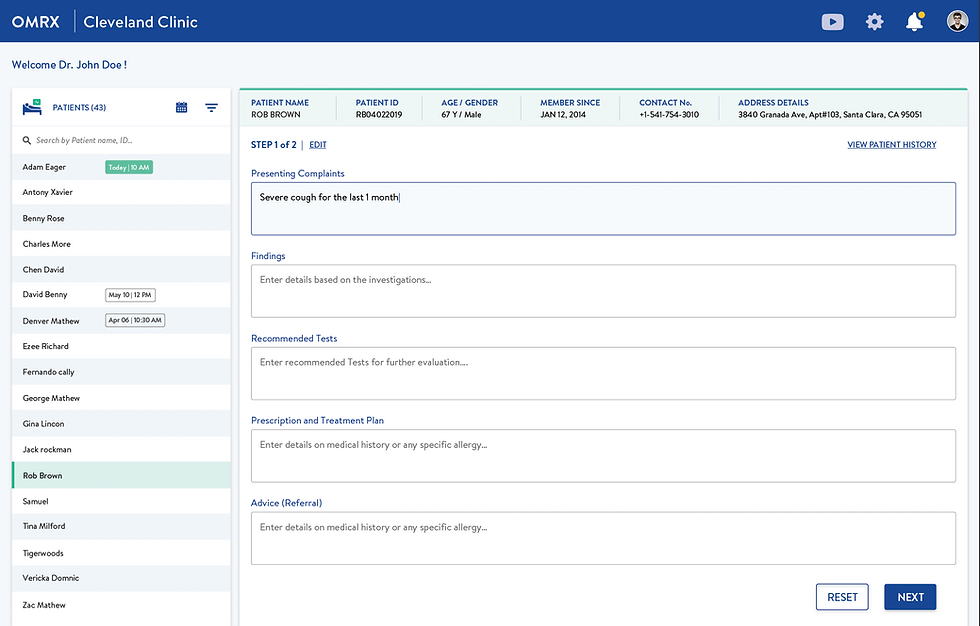
Provides quick access to patient profiles, including contact information, and medical history.
Allows users to search and filter patients while viewing upcoming appointments and notifications in one place.
Supports end-to-end visit documentation, from complaints and clinical findings to recommended tests, prescriptions and referrals.
Prescription Management
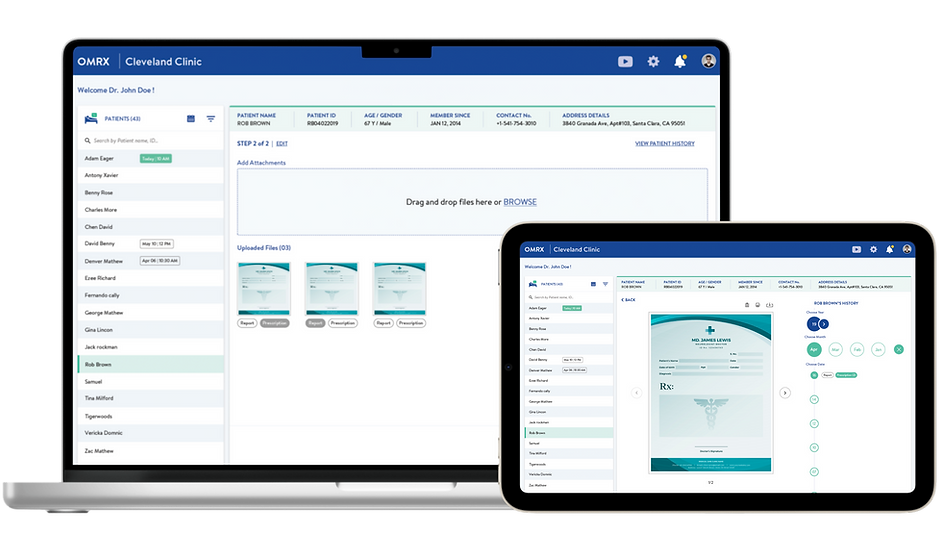
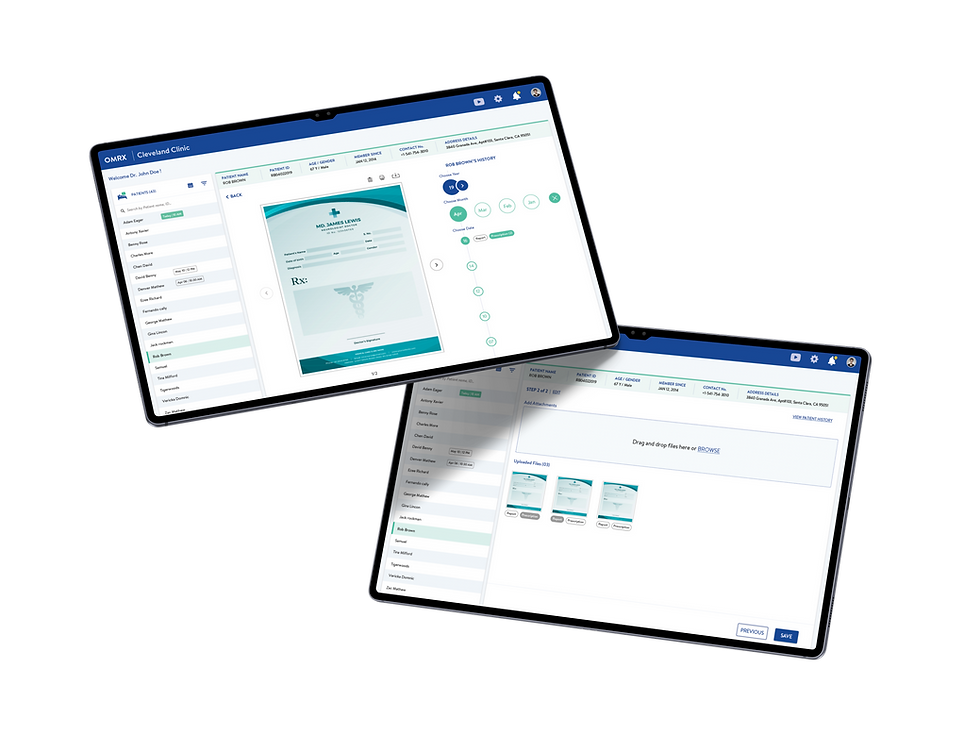
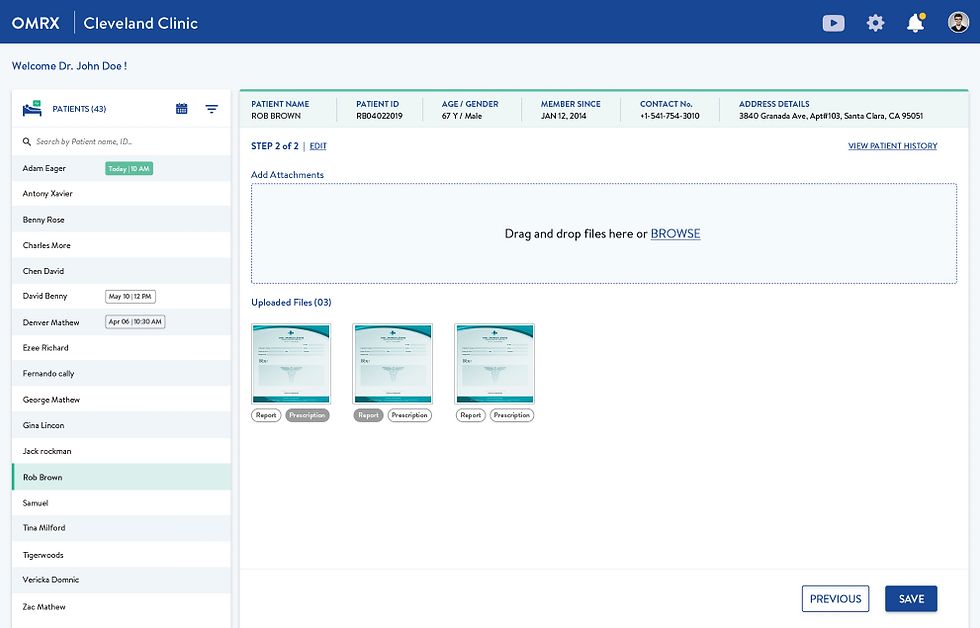
Centralizes patient prescriptions, reports, and medical documents for easier access and management.
Allows users to drag and drop or browse to upload attachments, such as lab reports and prescriptions, directly to a patient’s file.
.png)
Patient History & Records
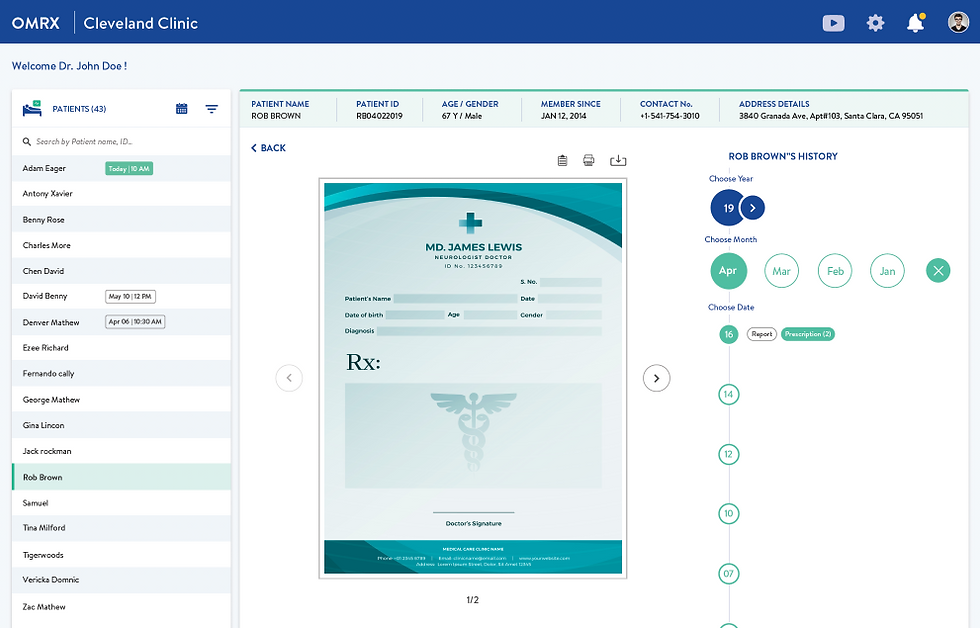
Allows providers to search a patient’s history by year, month, and date, making previous visits easier to locate.
Organizes reports, prescriptions, treatment plans, and other medical documents along a visual timeline for quick access and review.
Provides an in-platform document viewer so providers can review records without leaving the patient’s profile.
A better way to manage records
— RESULT
A user-friendly software solution that helps doctors manage prescriptions and patient records in healthcare settings. This smart system ensures accurate prescriptions by using electronic methods to prevent errors, while also keeping patient records safe and accessible. Doctors can easily access patient histories for informed decisions, reducing mistakes and providing personalized care. This solution streamlines prescription management, secures medical records, and ultimately improves patient outcomes and healthcare efficiency.