
Happy Companies
Redesign
.png)
AI-powered team coaching platform
— overview
From Behavioral Insights to Everyday Coaching
The platform began with profiles, assessments, and workstyle dashboards designed to help teams understand behavioral patterns, communication styles, and how individuals work together. This foundation transformed behavioral data into meaningful insights that could help employees better understand themselves and their colleagues.
As the product evolved, an opportunity emerged to make these insights more actionable in the moments they mattered most, before a difficult conversation, during a meeting, or while navigating conflict. The AI strategy expanded beyond the dashboard to deliver contextual coaching directly within Slack, Teams, and email, bringing personalized guidance into the flow of work.
ROLE
RESPONSIBILITIES
GOAL
UX Designer
Competitive Analysis, DISC Research, UI and UX Design
Redesigning the DISC assessment scorecard and Workstyle section to make behavioral insights clearer, more intuitive, and easier to apply.
70%
of the variance in team engagement traces back to the manager alone.
44%
of managers worldwide have received management training.
8x
more likely to be engaged when a manager acts as a coach.
What We Learned, in Numbers
— User research
The case for a product like Happy starts with a simple reality: strong teams depend on how people communicate, collaborate, and understand one another, yet employees and leaders often lack the support they need to navigate those interactions effectively.
— Assessment research
A DISC model, in Happy's language
Happy's Workstyle assessment is built on a four-dimension behavioral model, similar in spirit to DISC, renamed to fit the product's voice: Driver, Catalyst, Influencer, and Stabilizer. Every person is scored across all four dimensions, not sorted into a single bucket, the output is a profile, not a label.
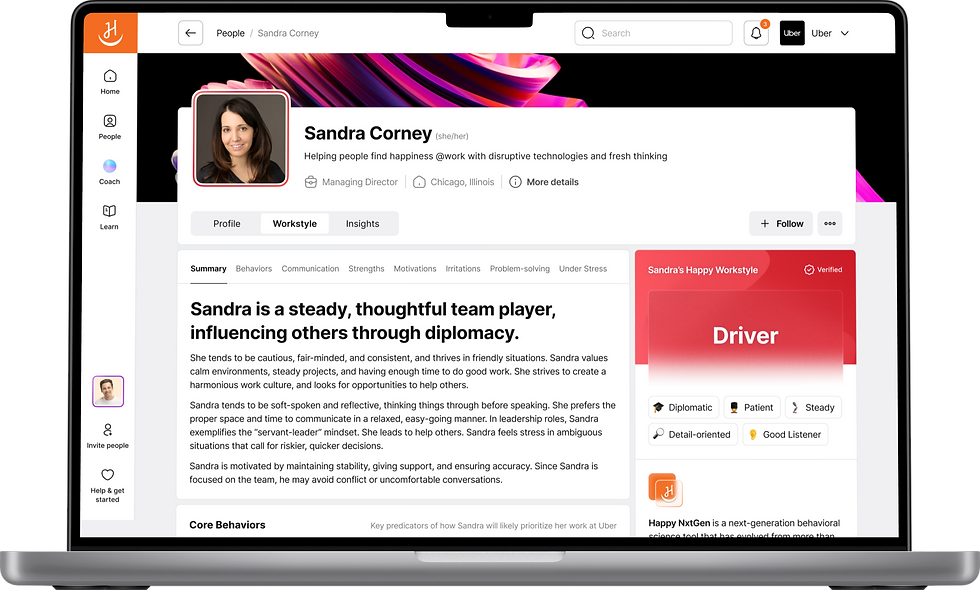
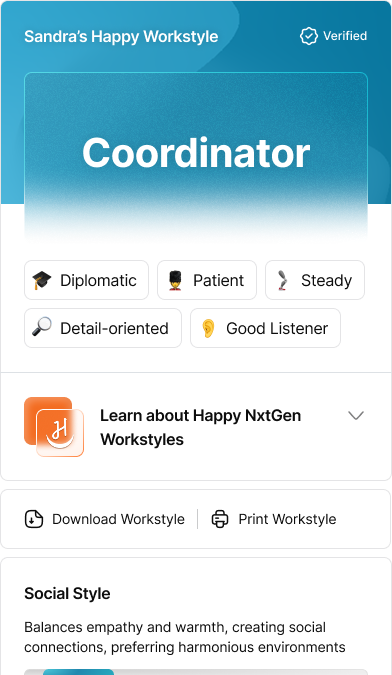
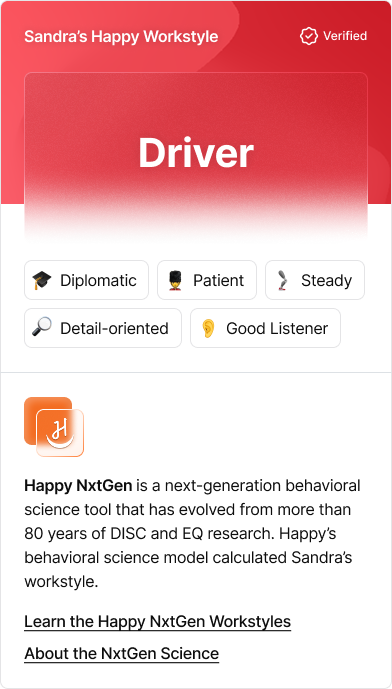
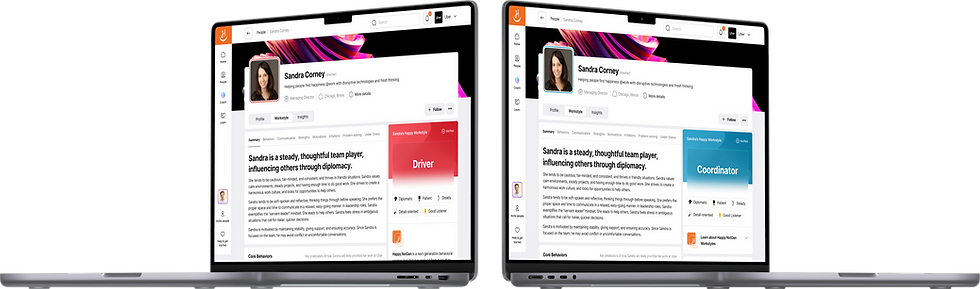
The primary card leads with the user’s highest-scoring dimension, paired with a short, specific description of how that behavior shows up day to day rather than relying on a generic trait label.
.png)
.png)
On hover or click, the card reveals scores across all four dimensions, providing a more complete view of the user’s workstyle. The relationship between these scores adds important context and makes side-by-side Team Insights comparisons more meaningful.
Who Happy is designed for
— User Persona
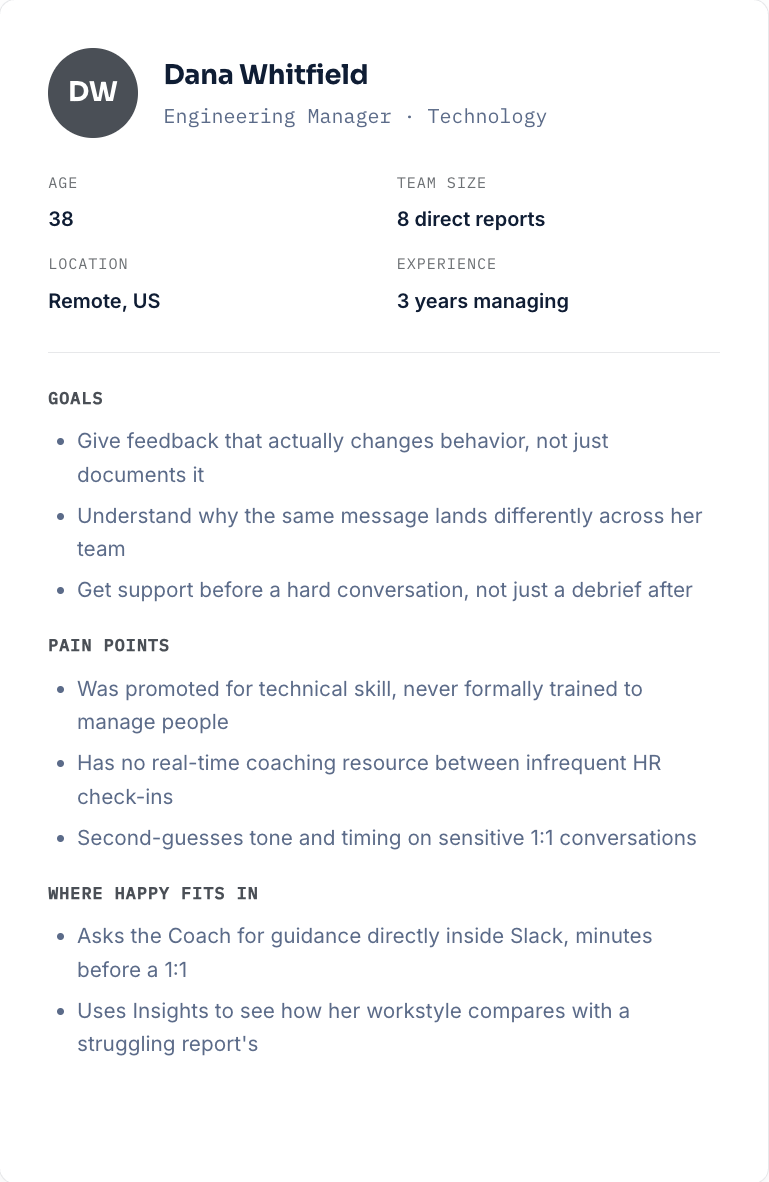
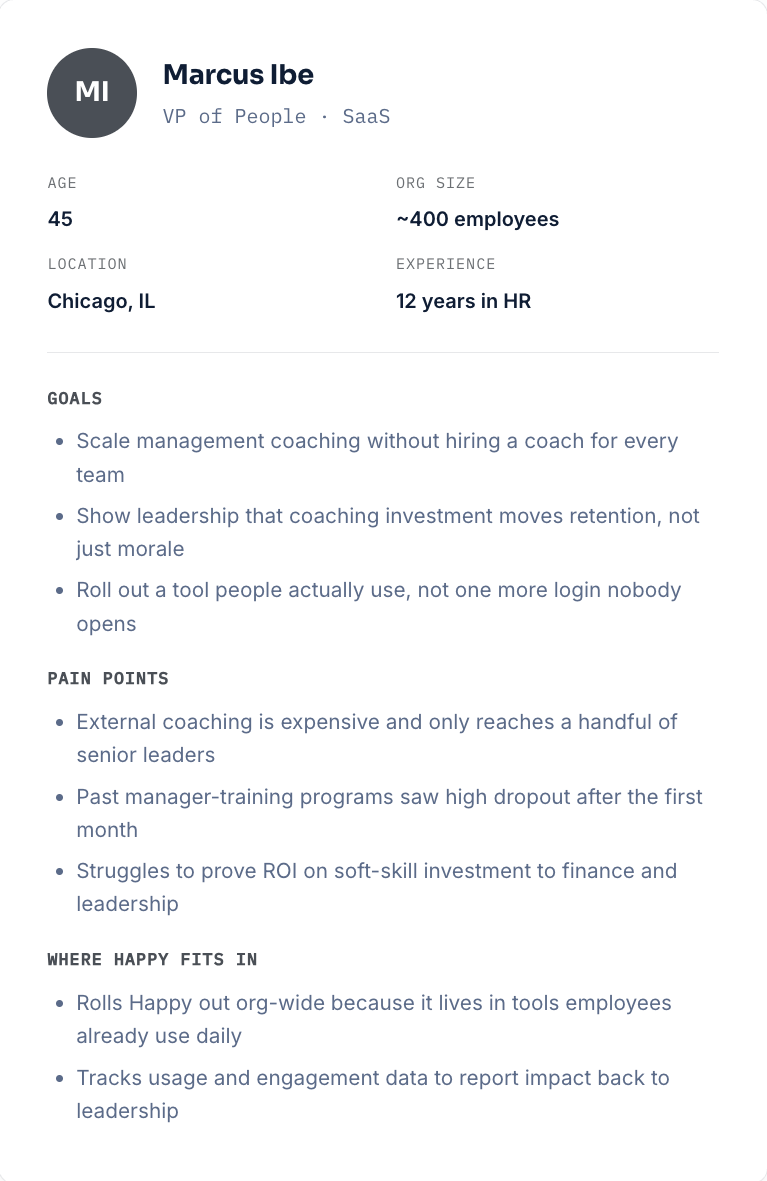
The following personas were created to represent the ideal users of the application, based on the information gathered during user interviews and research.
Feedback from the pilot
— User Interviews
I opened Slack ten minutes before a tough 1:1 and the Coach basically gave me a script. That's the whole pitch, honestly.
We rolled it out through Teams instead of asking people to learn a new tool, and adoption looked nothing like our last training program.
Seeing my workstyle next to my teammate's made a recurring disagreement make a lot more sense, we just process things differently.
The email digest is the only "coaching homework" I've ever actually opened. It's short enough that I read the whole thing.

.png)
— Prototypes
From Requirements to Reality
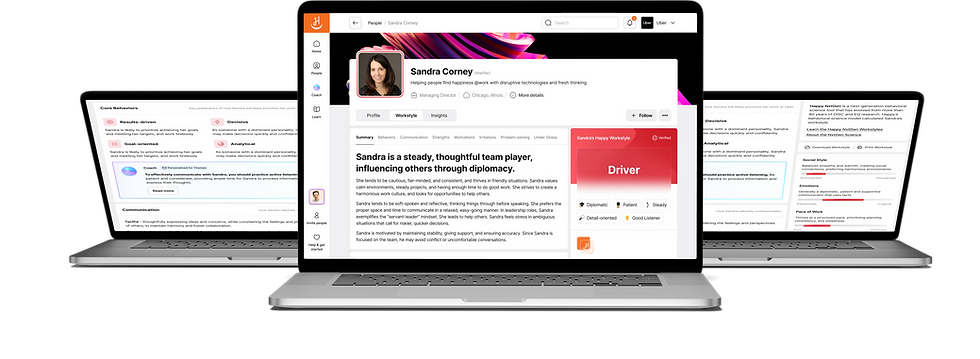
The prototypes brought the experience to life, translating ideas into clear, intuitive interactions. Each design iteration focused on simplifying complex information, addressing usability concerns, and creating an experience that feels useful and easy to navigate.
Work Style
The Workstyle card gives users a clear snapshot of their behavioral style, combining their primary workstyle with key traits to make assessment results easier to understand at a glance.
An expandable “Learn about Happy NxtGen Workstyles” section provides additional context about the behavioral science behind the results without overwhelming the primary experience.
Social Style
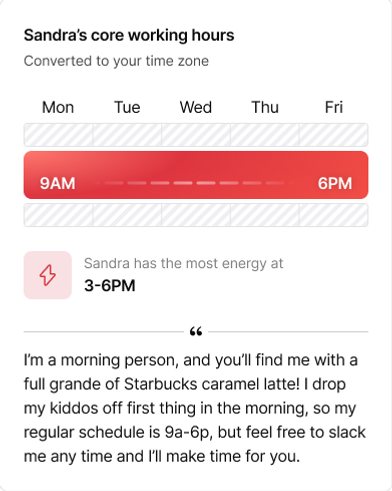
Highlights a teammate's best working hours, so colleagues know when they're most available and focused.
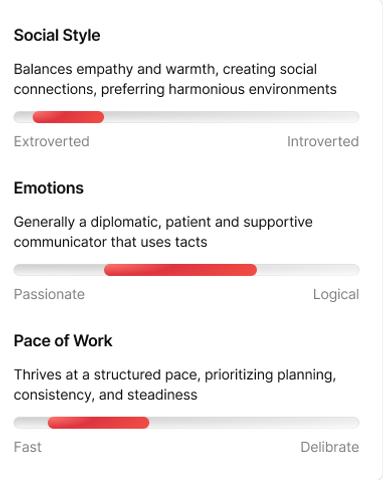
Surfaces social style traits like empathy, warmth, and how someone naturally builds trust.
Frames how someone approaches collaboration day to day, not just when they're online.
.png)
Core Behaviors
The Core Behaviors section highlights key traits and explains how they influence day-to-day work, communication, and decision-making.
Personalized coaching translates these insights into actionable guidance for communicating and collaborating more effectively with each team member.
Communication
The Communication section explains how a user naturally communicates, highlighting traits such as tone, expression, listening style, and approach to collaboration.
Personalized coaching turns these insights into practical recommendations, helping colleagues adapt their communication style for more effective interactions.
.png)
A smarter way to work together
— RESULT
Happy evolved into a complete coaching platform that brings behavioral insights into everyday work through assessments, personalized workstyle profiles, team insights, and AI-powered coaching integrated into Microsoft Teams, Slack, and email. Rather than limiting insights to a standalone dashboard, the experience was designed to make coaching more accessible and actionable within the tools people already use to communicate and collaborate. Pre-launch pilots reached 200+ executives and more than 1,000 managers, providing valuable feedback that helped validate the experience, refine key features, and shape the product.
.png)